
Meeting Teams Where They Are: Why Internal Experiences Are Becoming Connected Systems, Not Standalone Events
For years, organizations have invested in flagship internal moments to bring people together around a shared purpose. Annual kickoffs. Leadership summits. Innovation showcases. Town halls. These experiences still matter. They create energy, alignment, and connection in ways few other channels can.
But the pressure placed on them has steadily increased.
We expect a single moment to align teams, reinforce culture, strengthen leadership visibility, spark conversation, build community, and create momentum that lasts long after people return to work. That is a lot for one experience to hold. The organizations doing this well are not stepping away from events. They are extending them. Treating them as the center of something broader that starts before people arrive, continues after they leave, and shows up in the environments where work already happens. The workplace. The campus. The rooms and spaces people move through every day. Seen this way, internal engagement stops being a series of isolated events and becomes something more continuous. A connected set of touchpoints that reinforce a shared narrative over time. The event is still the moment. But the environment becomes the amplifier.
And the opportunity is not only what happens on stage. It is how leadership shows up afterward, how ideas get repeated in conversation, and how people who were not in the room still feel connected to what happened there. This is where a lot of organizations are starting to focus. Not on more events. On stronger connections between the ones that already matter.
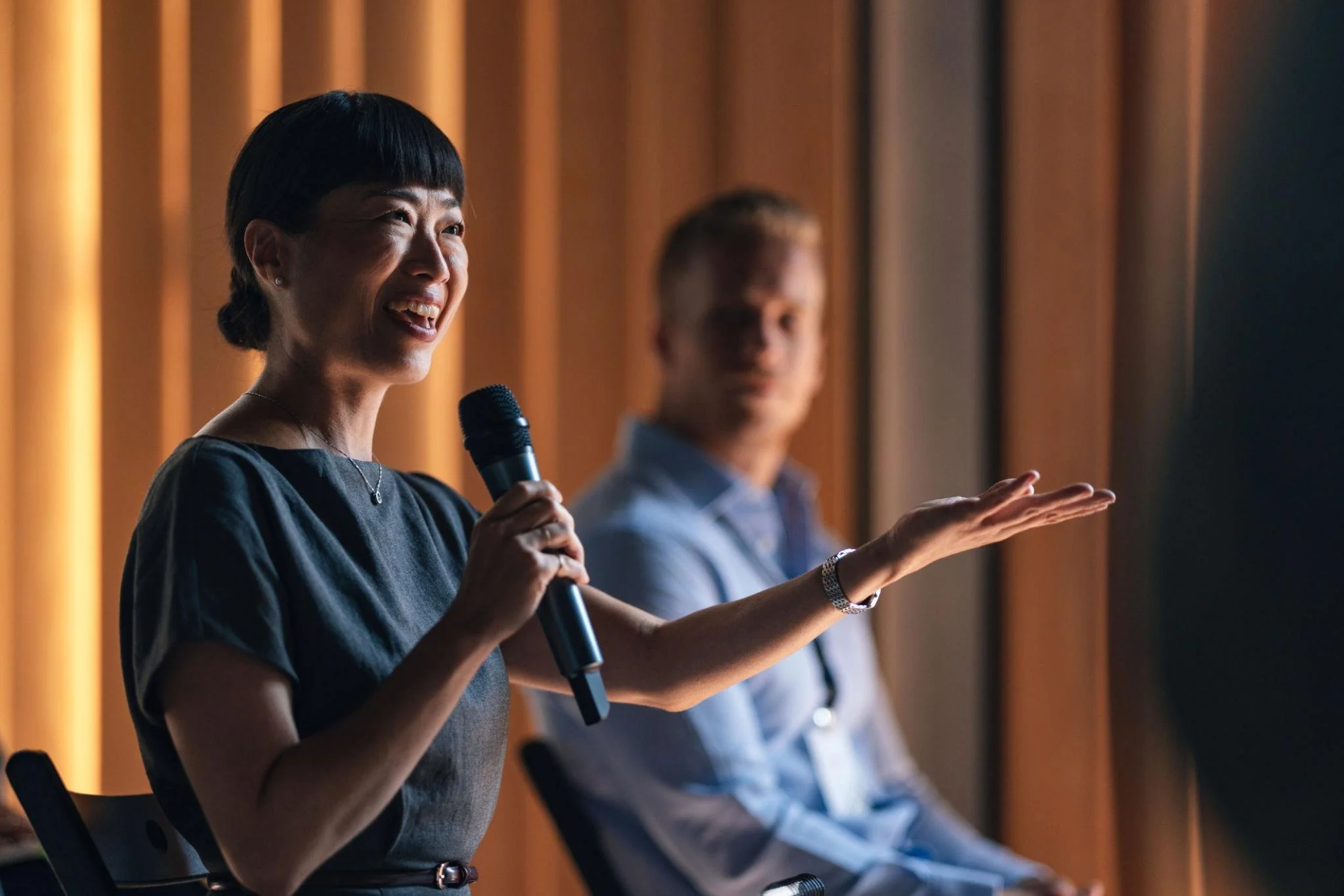
Most teams are very good at the main stage moment. The kickoff, the offsite, the town hall, the leadership summit. These are produced carefully, often at high investment levels, and they should be. These moments matter. But what is less intentional is everything around them. Because what often happens is this. You go to a town hall, hear updates, direction, goals for the company. In the moment it feels clear. There is energy in the room. Then you leave. And what happens next is usually less defined.
There is rarely a structured way to translate that message into your role, or to explore what it means for the work you are actually doing day to day. Whether what you have been focused on is landing the way leadership intended. Breakout sessions sometimes try to bridge that gap. Workshops, smaller group discussions, moments where people are asked to respond or contribute. In the room, it feels active. People engage. They share ideas. There is momentum. But a week later most of it is gone. Not because it wasn’t valuable, but because nothing carries it forward. The input doesn’t resurface. The conversation doesn’t get reflected back. And the leadership narrative tends to stay circulating at the top layers of the organization rather than moving into daily behavior. That’s where the disconnect actually sits. Not in the event. In what doesn’t happen after it.
If you look closely, these moments are never really isolated anyway. A message is introduced on stage, repeated in a deck, referenced in Slack, mentioned in a meeting a week later, then either reinforced or lost depending on what surrounds it. That already behaves like a system. The problem is we rarely design it that way. We focus on the moment where everyone is together and under-invest in everything that happens when they are not.
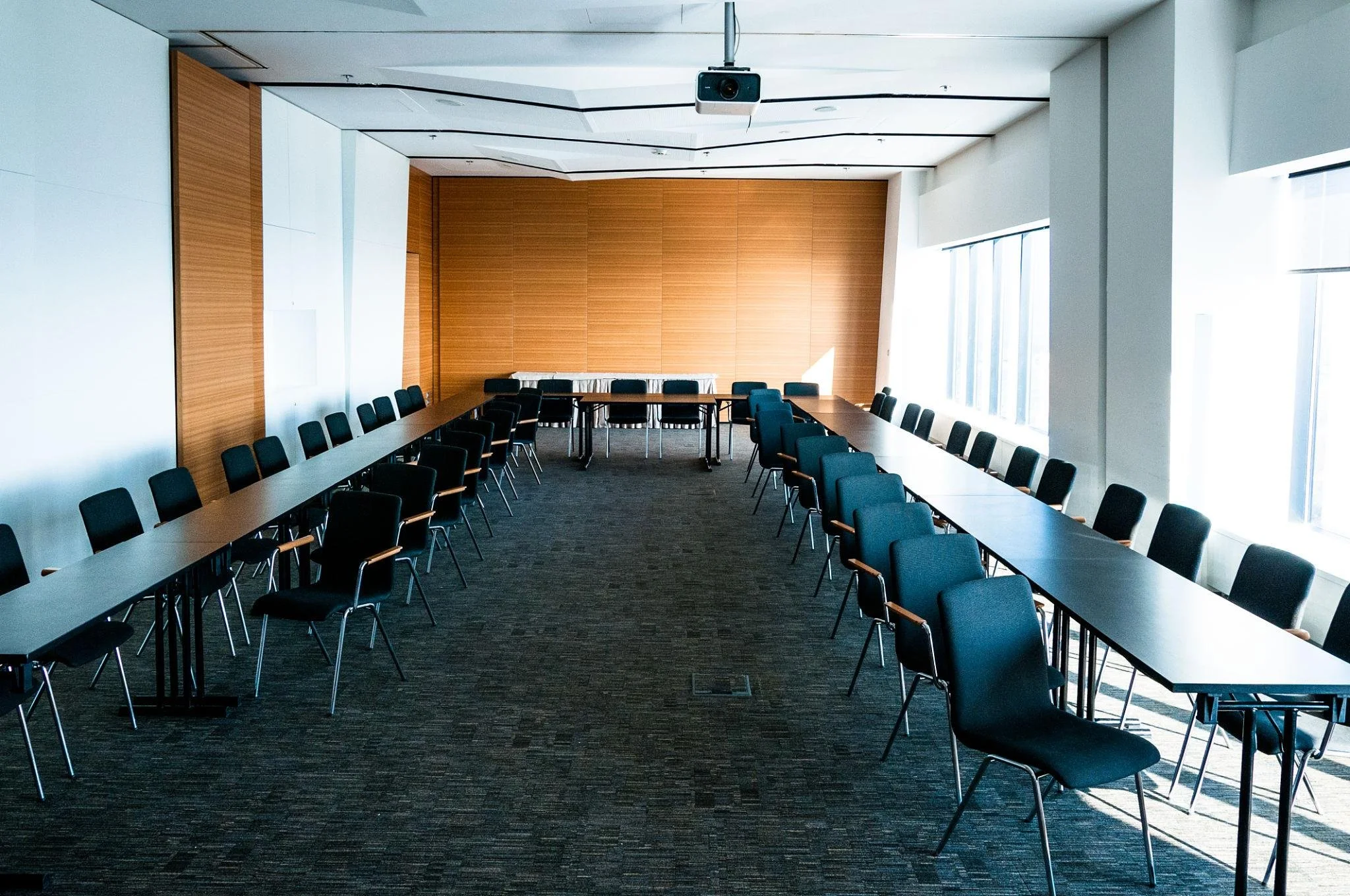
The workplace plays a much bigger role in this than it is often given credit for. Offices, campuses, shared spaces. These are not just where people work, they are where meaning gets reinforced or lost. And yet most meeting rooms and board rooms still operate exactly the same way regardless of what is being discussed inside them. Weekly calls, status updates, day-to-day discussions. Same setup. Same tone. Same visual language. Nothing signals that the moment inside that room might actually matter differently today than it did last week.
So when you start thinking about extending internal moments into those environments, even small shifts begin to matter. Not renovations or redesigns. More intentional adjustments in how space is used and experienced. Furniture that changes how people gather. Softer layouts that encourage discussion instead of default presentation mode. Small environmental cues like plants, lighting, textures. Simple additions like screens, coffee points, or work surfaces that make a room feel more active, more human, more open. When people walk into a space like that, they feel it immediately. Even if they can’t articulate why. The energy shifts. Attention changes. The moment feels more deliberate. And for presenters, it changes behavior too. The room reinforces that what is happening matters.

And when these moments are recorded or broadcast, the stakes change again. Because now you are not only designing for the people in the room. You are designing for everyone who is not. Most organizations treat this as a technical layer. A camera. A livestream. A way to extend reach. But it is actually a design problem.
What people see on screen either reinforces the importance of the message or quietly undermines it. A standard meeting room, captured on video, flattens the moment. It blends into everything else competing for attention that day. It becomes interchangeable. But when the environment is intentional, something shifts. The message holds weight. It feels deliberate. It earns attention in a way that is hard to quantify but very easy to feel. This is where production quality starts to matter, not as polish, but as clarity. A more considered space creates focus on camera. It removes distraction. It signals that what is happening is not routine, even if the format is familiar.
And for remote audiences, there is another effect that is harder to define but very real. A sense that they are not fully in the room. That something slightly more important is happening elsewhere. That pull matters. It keeps attention in a way that standard internal broadcasts rarely achieve. This is not about turning every meeting into a studio production. It is about understanding that internal communication now exists in multiple layers at once. Physical, digital, and distributed. And all of them are shaping how the message is received.
When those layers are aligned, the impact of the moment carries further. When they are not, even strong content loses weight the moment it leaves the room.

Most organizations do not struggle with the importance of internal engagement. The gap is what happens between the moments. There is usually a clear team for the event itself, and far less ownership of what connects it to everything else. So the event gets designed. It gets executed. It gets measured.
Then it ends. Not because it didn’t work. But because nothing was built to carry it forward. The opportunity is not more events. It is better continuity. More intention across the spaces, content, and conversations that sit between them.
The strongest organizations are not increasing volume. They are building connection.
And the impact of that shows up long after the room has emptied. In how people remember it, how they talk about it, and whether it continues to shape behavior once they are back in the flow of work.
Let’s Talk Through It
Most teams don’t need more production. They need better continuity between what already exists.
If you’re exploring how your internal events and environments connect—or don’t—we offer short working sessions to help you think it through.
No pressure. Just a focused conversation.
